Walking in their Footsteps: A Call to Solidarity

(This post was originally written for the Faith & Family Homelessness Project. I highly recommend checking out their resources and learning more about how to experience and volunteer with their Poverty Immersion program.)

I’ve never personally experienced poverty. It’s an obstacle that inherently separates me from people living on the margins. I’d like to think I’m in solidarity with the poor because of the way I vote, the money I donate and the time I volunteer. I’ve built houses in Mexico, volunteered at food banks, and even served two and a half years in the Peace Corps in Romania. I’ve spoken with people living with dirt floors and tin roofs and have shared meals with families with no running water or electricity. I even work at a peace and justice non-profit organization. But I’ve never lived on the margins.

poverty-mandela

Which is why participation in the poverty simulation offered by Seattle University School of Theology and Ministry made a difference. It brought me one step closer to personally understanding the stigma, barriers, and hurdles people on the margins face on a daily basis just to have access to food, shelter and healthcare. I was reminded that our “welfare” system is a punitive one, punishing people for needing help.

I played a small part; a day care provider. However, I was forced to turn people away because of overcrowding, funding, and health issues. Participants needed a safe place for their children in order to go to work and pay their bills. I wasn’t able to help everybody, even though I wanted to. I watched as participants became increasingly frustrated with their experience. In the end, everyone had a small glimpse into what daily life is like for our brothers and sisters without food, shelter or resources.

quote-it-is-easy-enough-to-tell-the-poor-to-accept-their-poverty-as-gods-will-when-you-yourself-have-warm-thomas-merton-347817

Afterwards, we unpacked the experience. There were plenty of opinions on how to “fix” the welfare system. Two comments stood out. One participant mentioned that when we give to the poor, we should ask their forgiveness. It is the poor and marginalized who have been failed by our society and system and we’re all part of the problem. Another person said we need to stop judging people for being poor; we need to change our system to make it easier for people to get the help they need. As much as possible, we should eliminate the piles of paperwork, agency signatures, hoops and rules we make people go through. Sure, some people might take advantage of the system, but how many more people would be helped and brought back into self-sufficiency.

These opinions made me rethink my behavior. I’ve never thought of asking a person for forgiveness when I hand them a dollar outside a supermarket. But it makes sense. By asking for their forgiveness and blessing, I’m reaffirming their inherent worth and dignity by treating them with respect; I’m asking them for something only they can give. And I need to stop caring how they ended up being homeless. It’s not my place to judge and I’m not qualified to ask.

quote-the-gears-of-poverty-ignorance-hopelessness-and-low-self-esteem-interact-to-create-a-kind-of-carl-sagan-332837

All I know is that as a man of faith, it’s my responsibility to respond with compassion. This is the hard truth of faith; this is where conversion of the heart takes place. When we stop punishing and start forgiving. When we stop blaming and start helping. When we treat our neighbor as ourselves. This is why I’m grateful for having been able to participate in the poverty simulation. It reminded me yet again of the humanity of the poor, allowing me, if only for a brief moment, to walk in their footsteps. That is where solidarity begins.
I’m not good at radical love.

(I’m not good at radical love first appeared on the blog Loved for Who You ArePlease visit them for more stories on living and practicing radical love!)

training wheelsI’m not good at radical love. Scratch that. I don’t think radical love is something I can be good or bad at. It’s something I need to learn. Not to be confused with the radically easy love, such as my affection for my friends and family with jobs, education, well-read opinions and good taste in beer. I love a lot of people who are safe, comfortable and encouraging. I support them and they support me, without judgement or hesitation. This is love on training wheels and at close to 40 years old it’s time for me to grow up.

In my experiences of volunteer work in Romania and Mexico and the United States, I’ve learned that for love to be radical it can’t discriminate; it “always protects, always trusts, always hopes, always perseveres” (1 Cor 13: 7) and not just for people who are easy to love. If I truly want a just and peaceful world, radical love is required for the homeless man who hits me up for cash every time I go to Whole Foods for my organically grown and fair trade sourced bread. Or the mentally ill woman on the bus who smells horrible because she hasn’t showered in weeks and wants to talk to me about how the police have ruined her life. Or the fundamentalist Christian at the gay pride festival holding a sign that says “Burn In Hell.” Or the drunk guy who lives under the bridge in my neighborhood. Or the African American woman who comes into my office because she saw the sign outside that reads “Intercommunity Peace and Justice Center” and thinks that we have money to give her so she can turn the lights back on for her three kids in her studio apartment. I need to learn how to love the hard way; to grow out of my comfort zone to embrace people who need love the most.

69766d03f350498d6f6b73b525dcf2c0Radically hard love is the price I pay for being a father. My first child will be born around Christmas this year. My partner and I didn’t know if we could conceive. Now a baby is around the corner and the world is suddenly smaller because it is filled with baby-potential. And just like I would hate to have somebody come over with a pile of dirty dishes in the sink and dog hair everywhere, I am ashamed at the state of my world for which responsibility will fall on my child. The only way my son/daughter is going to succeed where my generation has failed is if I can teach them radically hard love, and I can’t teach something I haven’t experienced.

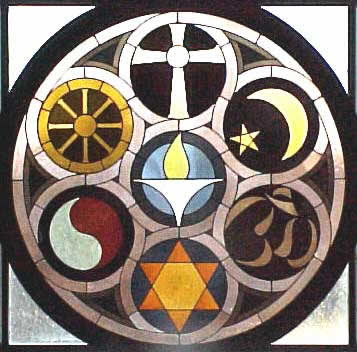
Radically hard love is the price I pay for faith. My Unitarian Universalist church demands radically hard love. Its seven principles challenge me to move beyond my safe relationships into the scary realm of solidarity with people on the margins of society. If I truly believe in “the inherent worth and dignity of every person” and “justice, equity and compassion in human relations” than I have to act for peace and justice in the world for every person, not just the easy ones. Otherwise the principles of my faith are just more words in a meaningless creed. Working at my non-profit I’m confronted with child trafficking in cocoa supply chains, human slavery involved in electronics manufacturing, mass migration due to global climate change, and what seems like a world going to hell in a hand-basket. It’s easy to succumb to compassion fatigue because everything is urgent and one man can only do so much. The only way I recharge is by going to church in solidarity with other peacemakers. But if I’m going to be honest and effective in my spiritual community, I have to learn radically hard love.

vocationRadically hard love is the price I pay for vocation. Years ago I had this crazy notion that I may be called to serve in some kind of ministry. Now that I’m studying at Seattle University’s School of Theology and Ministry, I am learning skills that help me connect with the prisoner, the beggar, the homeless, the gentile, the mentally ill, the foreigner and the outsider. There is a drive somewhere inside my head and heart (and maybe spirit?) that demands I overcome my unease and fear of people who may ask for more than I am comfortable in giving because these are the people who need radical love the most. If I’m going to true to this mysterious call to Vocation, in order to be true to myself, I have to learn radically hard love.

Because of my commitments to my children, faith and self, it’s time for me to stretch beyond the safe walls of my middle class life. I need to put radically hard love into practice in order to be the father, neighbor and minister I feel called to be, taking risks with my heart by connecting it to people who need it most. That being a Unitarian Universalist comes with a responsibility to creation and neighbor that mirrors the responsibility I learned as a child in bible class:

On one occasion an expert in the law stood up to test Jesus. “Teacher,” he asked, “what must I do to inherit eternal life?”
“What is written in the Law?” he replied. “How do you read it?”
He answered, “‘Love the Lord your God with all your heart and with all your soul and with all your strength and with all your mind’; and, ‘Love your neighbor as yourself.’”
“You have answered correctly,” Jesus replied. “Do this and you will live.”
But he wanted to justify himself, so he asked Jesus, “And who is my neighbor?”
In reply Jesus said: “A man was going down from Jerusalem to Jericho, when he was attacked by robbers. They stripped him of his clothes, beat him and went away, leaving him half dead. A priest happened to be going down the same road, and when he saw the man, he passed by on the other side. So too, a Levite, when he came to the place and saw him, passed by on the other side. But a Samaritan, as he traveled, came where the man was; and when he saw him, he took pity on him. He went to him and bandaged his wounds, pouring on oil and wine. Then he put the man on his own donkey, brought him to an inn and took care of him. The next day he took out two denarii and gave them to the innkeeper. ‘Look after him,’ he said, ‘and when I return, I will reimburse you for any extra expense you may have.
“Which of these three do you think was a neighbor to the man who fell into the hands of robbers?”
The expert in the law replied, “The one who had mercy on him.”
Jesus told him, “Go and do likewise.”

lovewithoutexceptionssquare-500x500Now that I’m an adult, I’m no longer looking for salvation or eternal life but I can hear the wisdom in this story; that the whole world is my neighbor and the whole world needs merciful acts of radical love.

Why I go to church…

collapse-michael-ceraWorking at a peace and justice non-profit is an emotional double-edged sword plowshare. It is emotionally fulfilling to have a small part in making the world a better place. It is emotionally crippling because every day I am confronted with the injustice and inhumanity of human trafficking, war, ecological destruction, greed and corrupt power. Compassion fatigue is real; I can only watch/read/research so much before the pictures/videos/stories become numbers/statistics/calculations instead of real people.

My symptoms include bypassing petitions instead of filling them out; deleting email action-alerts instead of reading them; turning the radio station from KUOW to KEXP when a challenging story comes on; binging on Netflix instead of keeping up with current events. If I let the fatigue persist it would be easy to just give up. Heck, sometimes giving up looks pretty damn attractive. It would be much easier to just give in and become just another consumer who doesn’t give a f*#k about anybody but myself. But I don’t want to be this person. I choose to fight the good fight. Therefore, I go to church.

giphyWhen I announced I was becoming a Unitarian Universalist, some of my atheist friends questioned why I just didn’t give up on religion all together. They all have very good reasons; as an institution religion has been as much a problem of the world as a solution to the world’s problems. Why would an atheist or agnostic attend a church service? Those are places for believers. My answer is simple: To stay a sane, healthy man of peace, I need religion.

Religion provides me with a community, sanctuary and covenant that is focused on peacemaking. It reminds me that I am not alone in working to build a more just world. It cures my compassion fatigue because it restores my faith in people. When peace and justice work becomes too heavy, it is my church that lightens the load. In a space filled with atheists, believers, agnostics, questioners and religious refugees, our attendance shouts to the universe: “We will continue the work! We will not give up! We crave peace!”

rocky-training-oIn order to do the work I do, to continue to read the stories, watch the videos, and look at the pictures; to keep on filling out the petitions, contacting the representatives, and raising awareness; I have to feel like I’m not alone. And every Sunday, along with other justice-seekers, it is in singing our doxology that I am spiritually renewed to keep on fighting the good fight:

“From all that dwell below the skies,
let songs of hope and faith arise!
Let peace, goodwill on earth be sung
through every land, by every tongue.”

May it be so. Amen.

My elevator speech.

KmhiOVGYesterday I mentioned that I completed my first class in grad school. It was a great experience. However, I did run into a typical UU situation. In addition to my being the only male in the class, I was also the only Unitarian. This isn’t surprising. I was actually expecting it. What I forgot to do was prepare my elevator speech.

An elevator speech is a 10-15 second answer that you’d give to a person if you were in an elevator. It’s meant to be quick and precise. It’s better when it’s rehearsed. I have an elevator speech for when people ask me what a peace and justice center does: “We are a small non-profit that engages issues of peace and justice through education and systemic change. We use corporate responsibility, lobbying, retreats, leadership training, workshops and publications to engage issues of environmental, social and economic change that furthers humanity’s respect for the Earth and each other.”

giphy (3)Unfortunately, I don’t have an elevator speech for Unitarian Universalism. While a lot of people don’t know the denominational details of a particular church, there is a general understanding. “Oh, you’re a Christian.” Even Mormons and Scientologists usually don’t have to answer questions like “What is that?” It seems as of late I have been travelling in too tight of circles. Everybody in my class came from a major Christian religion, but there was some confusion as to where UU fit in the puzzle.

I also had a hard time explaining what it was. In a deer in the headlights moment, I fumbled my way through using words like “liberal” and “progressive” and “individuality.” I confess I didn’t do the religion justice. The problem is there is just too much to talk about and not many definitive answers. My answers to questions were mostly “sometimes.”  “Do you read the bible?”  Sometimes. “Is UU Christian?”  Sometimes. “Do UU’s believe in God?”  Sometimes.

Wibbley-wobbley-timey-wimeyIt’s all very complicated and from a non-linear, non-subjective viewpoint, it’s more like a big ball of wibbly-wobbly, timey-wimey stuff. Or maybe I’m misquoting? The point is I need an elevator speech. So here it is:

“Unitarian Universalism is rooted in liberal Christianity and developed out of the reformation. It is now a pluralistic, non-creedal religion that believes truth resides in the individual as informed by experience, tradition, family, culture and history. We have seven principles which guide our congregations, all of which boil down to ‘there is one love and nobody is left behind.’”

Easter for a (former) Christian…

wine and matzah...
wine and matzah…

On Monday Heather and I went to a Passover Seder. Even though I’m not Jewish, I found it powerful to be in solidarity with my friend, her culture, her friends and others around the world in remembering slavery, hardship, and the promise of a brighter future. She used a special haggadah (telling) focused on social action and solidarity with love and justice. I learned from various guests about differences in the Jewish community, their faith and family traditions, and shared (non)traditional food and drink. It was amazing!

Last night we went to a Maundy Thursday communion service held at our church. It was sparse; only a few dozen people. We listened to biblical readings, commemorated the Last Supper through wine and bread, and stood in solidarity with the teachings of Jesus of Nazareth. It was solemn and intimate; such a stark contrast to the rowdy Seder we experienced only a few days before. But the Christian holy week is supposed to be muted. We walk with a man sentenced to death because his beliefs challenged those in power.

circle-wise-women-full-lighted-KE-12096After the communion service, we attended a candlelight vigil for a young woman who was hit by a car in our neighborhood. Her story is tragic. It was a senseless accident which robbed a father of his only daughter. They lived just a few blocks away from us and we felt we should stand silently with the Nepalese family. Once again, we were reminded that this week especially is a time of mourning and remembering. It is a time where community comes together because life has become too much.

Even though I no longer qualify as a Christian, I would be dishonest to not participate in this religious time of year. Christianity is a part of my history, my journey, and will remain part of my future. The Judeo-Christian tradition holds powerful truths; its essays and stories of humanity struggling with identity, definition, relationship and the unknown are timeless. It is also controversial, especially in a Unitarian Universalist congregation.

One love; nobody left behind...
One love; nobody left behind…

My church is filled with religious refugees. A lot of my brothers and sisters have been hurt by Christianity. They were kicked out of their homes for being gay; they were told they were going to hell because they didn’t read the bible the same way; they were told they were evil and sinful for just being human. Of course only a few of us would show up to a Holy Thursday communion service. For many, this time of year is too painful. For others, it is meaningless.

Yet for me, the communion service was powerful. The Seder was powerful. This time of year is powerful. I’ve heard more than one person describe this as a “thin” time where spiritual life and daily life become intertwined and we have the opportunity to better interact with god/nature/earth/spirit. Because of my history, I have no choice but to sink into this thinness and let myself steep in the spirit of Jesus, the Hebrew prophets, the saints and the apostles. By participating in these Jewish/Christian days, I commemorate where I came from. I mourn for what I have lost. I am reminded of why I changed. I embrace where I have set my spiritual future.

Easter blessings...
Easter blessings from Seattle…

Many people in my church wouldn’t agree with my Easter experience; but almost all of them would support it. I found a community which can say “beyond our ideas of wrong-doing and right-doing, there is a field. Let us walk there together.” Nothing says more about this time of year than that.

Walking the pro-(choice/life) line…

It just makes for a bigger headache...
It just makes for a bigger headache…

I can tell it’s around the anniversary of Roe v Wade by the amount of pro-whatever debates I hear on the radio. Which is a good thing. We need to continue to struggle with issues of life and death in the U.S. I just wish it were a bit more intelligent. Usually it’s one person pulling the Jesus card and the other person pulling the “I do what I want” card. It’s another example of the polarization of our politics and how unwilling we are to just listen to another point of view. Then there are people like myself who are both pro-life and pro-choice.

It's all about the dignity of life... right?
It’s all about the dignity of life… right?

I’m pro-life because I believe in the inherent worth and dignity of every human person and I believe as a society we should respect the miracle and preciousness of ALL life. Which is why I have a problem with 99% of the pro-life camp. They’re really not about life; they’re about birth. My impression is that the pro-life camp just wants babies to be born but could care less about how they end up. Once the kid pops out, pro-lifers wash their hands of the issue and call it another day at the office. There is little mention about the quality of life for the child. What if it’s born into an abusive household? Or horribly handicapped and deformed because of drugs and/or alcoholism? What about issues of poverty, nutrition and education?

Yeah... about that...
Yeah… about that…

These are all LIFE issues. If people want to call themselves pro-life, then it’s all or nothing. You’re going to have to care about and share in the responsibility for every man, woman and child. If you’re pro-life, you better be working to address issues like economic disparity, education, workplace inequality, racism, food deserts and access to medical care that make life hard for the 50 million Americans in poverty. If you’re one of those assholes who scream about babies being slaughtered but tell your representative to cut welfare, you are doing it wrong.

One, of many, reasons...
One, of many, reasons…

I’m pro-choice because I believe if we’re going to live in a free, democratic country than we have the responsibility to provide access to safe and quality health care to ALL our citizens. It’s an issue of justice which includes women who need to have an abortion. Because let’s be honest, nobody WANTS to have an abortion. It’s not something a woman looks forward to with her morning coffee. It’s a damned hard decision that will have repercussions and ramifications for the rest of a person’s life. This is why it’s up to the individual woman, and not the state, to choose. It’s the kind of life decision where judgment and necessity exist ONLY within the person making it.

How is that iPod I helped make working for ya?
How’re you enjoying that iPod I helped make?

“But if you’re pro-life, how can you support murdering babies?” You know what, I don’t support murdering babies. Just like I don’t support children dying of starvation; yet I still have a full three-square meals a day. You can’t make abortion illegal because it kills babies and not outlaw obesity at the same time. We are ALL complicit in abortion, just like we are with child slaves mining the minerals to go in our electronics and the impoverished hands that make our clothing. We’re ALL part of the problem.

stckr-Better-futureI am NOT pro-abortion. I don’t think anybody is. However, I believe its legality is necessary for freedom, health and quality of life. But just because it’s necessary doesn’t mean I can’t work to make it an uncommon practice. Abortion will always be a part of human society and it’s not a single action removed from all the other issues of our time. To address it, I have to continue to work hard to build a better society that furthers the arc of history as it bends towards justice. Abortion isn’t about pro-life/choice. It’s about pro-justice.