What can I teach my son about violence?

3811620119_american_flag_gun_xlargeWith another mass shooting by an armed white male, I am once again reminded (as if I could ever forget) that I live in a society with the potential for murderous violence. And no matter what the NRA and Fox News or any other pundit tells me, I agree with President Obama’s assessment: “Now is the time for mourning and healing, but let’s be clear: at some point, we as a country will have to reckon with the fact that this type of mass violence does not happen in other advanced countries.”  It doesn’t. Not with the frequency as it has been happening. Not with the body count. There is something wrong with us as Americans.

I’m at a loss, because I don’t know what else I can do. I already work for a peace and justice non-profit. I am studying in ministry so I can work and preach out against violence and promote systemic change. I try to be an active part of my neighborhood and community. But it is not enough. None of it seems to stop the killing; not in a park or a school or even a church. I confess, I am afraid not for my life, but for the life of my partner and son.
flat,1000x1000,075,f.u2No amount of armed escalation on my part is going to keep them safe. I cannot be with them 24/7. I am also not arrogant enough to believe, should I ever own a gun, that my preemptive killing of an assailant will make things better. One thing I’ve learned through studying ancient texts; violence only begets more violence. So what else is left other than being a man of peace? I can raise my son to be a man of peace, too.

I will teach my son that Black Lives Matter.

Tobias will also be taught that all lives matter. But in particular, he will know from an early age that specifically, black lives matter. Because it is black lives that have been put through our cultural meat grinder. I will make sure he understands, at least as much as he is able, what the black community has gone through in our country. I will not sugar coat the history or the reality of the killing and the incarceration and the lack of educational and economic opportunities his black brothers and sisters have had to endure. I will raise him to acknowledge his own prejudices when he finds them, and to challenge the prejudice around him.

I will teach my son to respect Women.

I want Tobias to learn the history of patriarchy and the importance of equality. He will learn about women who have shaped the world through religion, science, literature and politics. I will work to make sure he sees women as partners who are just as capable as he is in everything from sports to education to work to family. I will make sure that he understands that a woman’s body belongs only to her and that he has no right over it at all. I want to show him that taking away the rights of women and girls only hurts our world. I will raise him to be a feminist ally.

I will teach my son to respect Sex.

I can teach my Tobias to respect his own sexuality and the sexualities of others. He will be shown a healthy respect for his body and that the bodies of other people are just as sacred as his. I want him to see himself as beautiful, and acknowledge that the beauty in others comes not from their appearance but from their humanity. I will teach him that sex is good and fun and healthy and so very special that he should never be ashamed of sharing intimacy with another person.

I will teach my son about his Privilege.

Not the kind of privilege that makes him better than other people. I will teach him about the responsibility that comes with his access to education, a safe home, new clothing, clean water, healthy food, electricity, and access to computers and information. I can impress on him that, because he was born to my partner and I, he has already won the lottery and lives better than most of the world. I hope he can understand and accept the guilt that comes with receiving what he has not earned. I pray that he uses that guilt to change the world; to understand that with great power comes greater responsibility. I will raise him to know that his privilege requires him to be a servant leader.

11406657_709812235797484_1988572270914461636_oThis seems like an impossible task. He has everything working against him, from history to mass media, education to religion. And as much as we want for our children, I know that I can only do so much; he is his own person. But if I can make the world a better place through my son, I will. Along with my partner, through gentleness, love, guidance and prayer, I will try to shape his young mind toward justice. I will teach my son how to be a better man than I could ever be, for him and for his future.

Life isn’t (un)fair…

universe-hd-photo95-JPGA long time ago I stopped believing in a fair universe. From everything I’ve observed, life is a mix of intentionality, chance and inevitability. I have a small amount of agency; I work hard and pay my taxes and volunteer all of which come with their own rewards. But for the most part, life is just as likely to kick me in the balls as it is to let me win the lottery. Nature has no sense of justice outside of its laws of cause and effect. It is up to me to create fairness from an otherwise apathetic life.

When I believed God was in charge of everything, I had mantras like “it’s all part of God’s plan” or “God doesn’t give us more than we can handle” to fall back on whenever undeservedly bad things happened to good people. (let’s be honest, bad people deserve it, right?) Eventually they all became platitudes. Because as more curses and blessings stacked up, most of which without any catalyst, God’s plan began to look like trying to read tea leaves and God had a funny sense of what people could handle vs. what they should have to handle. In the end I was forced to reject the notion of a just God because a just God wouldn’t stand idly by in the face of so much injustice.

free-willNot just the kind of injustice that people intentionally cause; not crime or war or corporate greed or any of the millions of ways we dehumanize each other. I’m talking about the stupid everyday injustice, like car accidents and slipping on a patch of ice and breaking your leg. Accidents with horrible consequences. The butterfly effect of causality that reaps human life. I can’t even buy into the “free will” answer: God doesn’t intervene because he loves our free will more than he loves starving children. It’s bullshit, because that’s not love or justice, that’s an excuse. Therefore, I was left with either rejecting my preconceptions about God or believing in a lie.

Recently, my father-in-law passed away. While he was not perfect, he lived a good and clean life. He didn’t smoke. He drank less than occasionally. He was a runner. He attended church, was married more than 30 years and was an overall good man. He was diagnosed with throat cancer, which spread to his brain and eventually to the rest of his body. The doctors originally gave him 6 months to live. He fought for over 4 years until May 11th, 2015. There it is; blessings and curses all wrapped up in a whole ball of intentionality, chance and inevitability. If a just God did exist, this wouldn’t have happened.

BristleconeThe ironic part is I wish I still believed in a just God because right now I could really use something to blame. I want to look God in the eye and say “You are wrong! You did this! This is your fault and how dare you proclaim love and justice and mercy and compassion when you let good men suffer and die!” I am angry because Andy didn’t deserve to die. Not this way; not like this. He deserved better from his God than he received. There are millions of other people in the world who are more deserving than he was to die of cancer. This is a horrible statement but right now I feel horrible and selfish and hurt and confused and broken. And tired.

Right now I am just. So. Tired. Because what is the point? Why should I work so hard for ideals that go against the very fabric of the universe? Why should I care? In a just universe I’d be able to look at my son and tell him that life will be kind. But right now all I can tell him is that he will never know his grandfather; that he was robbed of having a good man in his life because life isn’t fair.

Life just is.

It is a hard lesson and I’m left with one lonely realization; if there is going to be justice in this world then I’m going to have to be the one making it happen. It’s up to me to create justice where it doesn’t exist. Because that is what I want to do. The responsibility has been passed from God to me and it’s a heavy load. 11238228_10153338843751934_1951030714927036305_nFortunately I know a whole lot of other people who are working to lighten that load. I know miracle workers on the margins of society who squeeze justice from life like blood from stone and I want to be just as strong and powerful and tireless as them. And maybe if I can just keep trying, keep believing in love and justice, I can make my father-in-law’s death mean something.

Because I think that’s what he would have wanted. And it’s what I want. Rest in love Andy. I’ll keep working on the justice.

Walking in their Footsteps: A Call to Solidarity

(This post was originally written for the Faith & Family Homelessness Project. I highly recommend checking out their resources and learning more about how to experience and volunteer with their Poverty Immersion program.)

I’ve never personally experienced poverty. It’s an obstacle that inherently separates me from people living on the margins. I’d like to think I’m in solidarity with the poor because of the way I vote, the money I donate and the time I volunteer. I’ve built houses in Mexico, volunteered at food banks, and even served two and a half years in the Peace Corps in Romania. I’ve spoken with people living with dirt floors and tin roofs and have shared meals with families with no running water or electricity. I even work at a peace and justice non-profit organization. But I’ve never lived on the margins.

poverty-mandela

Which is why participation in the poverty simulation offered by Seattle University School of Theology and Ministry made a difference. It brought me one step closer to personally understanding the stigma, barriers, and hurdles people on the margins face on a daily basis just to have access to food, shelter and healthcare. I was reminded that our “welfare” system is a punitive one, punishing people for needing help.

I played a small part; a day care provider. However, I was forced to turn people away because of overcrowding, funding, and health issues. Participants needed a safe place for their children in order to go to work and pay their bills. I wasn’t able to help everybody, even though I wanted to. I watched as participants became increasingly frustrated with their experience. In the end, everyone had a small glimpse into what daily life is like for our brothers and sisters without food, shelter or resources.

quote-it-is-easy-enough-to-tell-the-poor-to-accept-their-poverty-as-gods-will-when-you-yourself-have-warm-thomas-merton-347817

Afterwards, we unpacked the experience. There were plenty of opinions on how to “fix” the welfare system. Two comments stood out. One participant mentioned that when we give to the poor, we should ask their forgiveness. It is the poor and marginalized who have been failed by our society and system and we’re all part of the problem. Another person said we need to stop judging people for being poor; we need to change our system to make it easier for people to get the help they need. As much as possible, we should eliminate the piles of paperwork, agency signatures, hoops and rules we make people go through. Sure, some people might take advantage of the system, but how many more people would be helped and brought back into self-sufficiency.

These opinions made me rethink my behavior. I’ve never thought of asking a person for forgiveness when I hand them a dollar outside a supermarket. But it makes sense. By asking for their forgiveness and blessing, I’m reaffirming their inherent worth and dignity by treating them with respect; I’m asking them for something only they can give. And I need to stop caring how they ended up being homeless. It’s not my place to judge and I’m not qualified to ask.

quote-the-gears-of-poverty-ignorance-hopelessness-and-low-self-esteem-interact-to-create-a-kind-of-carl-sagan-332837

All I know is that as a man of faith, it’s my responsibility to respond with compassion. This is the hard truth of faith; this is where conversion of the heart takes place. When we stop punishing and start forgiving. When we stop blaming and start helping. When we treat our neighbor as ourselves. This is why I’m grateful for having been able to participate in the poverty simulation. It reminded me yet again of the humanity of the poor, allowing me, if only for a brief moment, to walk in their footsteps. That is where solidarity begins.

Celebrating a time of thin-ness…

EquinoxAutumn is my favorite season. I love the crispness in the air, trees changing color and how nature begins to slow down. It seems to me that the world is responding deeply, as if letting out a long breath that has been held since the arrival of spring. The days grow shorter and colder. Yet nothing is ready to give up the joy of summer.

Speculaaskruiden_mThere is an urgency to get ready; to prepare. In the same moment, there is time to celebrate. Embracing the harvest, life says thank you to the sun for heat and growth and innocence. I begin to make my heavy beer and cider. Heather begins to can and bake. It is the time for strong flavors. Clove, cinnamon, licorice, nutmeg… these are the mellowing agents that ease the cutting air and early sunsets. They spice my coffee, chocolate, wine and whisky. They are the soft glowing embers that somehow remain long after warm liquids are consumed.

Today is the Autumnal equinox. Today for Mabon I am encouraged to reap what I’ve sown. To give thanks for blessings and to offer penance for sins. Because in three months, winter will come. In three months, we will be in darkness. In three months, my son will be born.

48899a6a49d91b417310cd3e07552089There is a term called “thin places” where supposedly the boundaries between the physical and spiritual become permeable. Perhaps there is a wisdom here, as a day that marks both balance and transition can draw the mind towards contemplation. Today is a “thin day;” a day for giving thanks, for letting go of regrets, for forgiveness and for friendship. Truly, it is a special day as much as any day which has the gift of meaning and intentionality.

So to embrace the thin-ness of the fall equinox, I am giving thanks for my bounty! A life full of richness and wealth, love and life. I am thankful for my time and place, opportunity and situation. I acknowledge that I only had a part in my blessings. That everything I have was helped along by friends and family and church and coworker and taxes and infrastructure and institution. My blessings are not an island, so I give thanks for the help I’ve been given.

autumn-leaves-wallpapers-photosI ask for forgiveness from my parents, for not calling as often as I could and for not being as appreciative of them as I should. I ask forgiveness from my friends for not giving you as much time, love, support or attention as you deserve. I ask forgiveness from the homeless man on the corner for not looking him in the eye. I ask forgiveness from my dog for choosing Netflix over walks, and laziness over dog-park time.

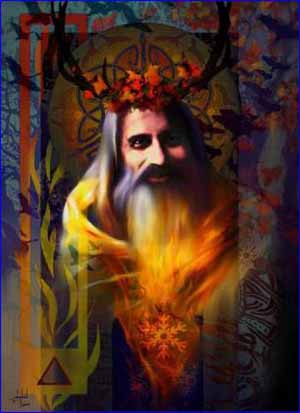
Green Man autumnI celebrate the food we’ve grown in our backyard! For the 18 pounds of raspberries and countless tomatoes and potatoes and peppers and kale. I celebrate the land for its soil, the rain for its water, the sun for its energy and life for giving food to eat.

Today I celebrate Autumn.

I’m not good at radical love.

(I’m not good at radical love first appeared on the blog Loved for Who You ArePlease visit them for more stories on living and practicing radical love!)

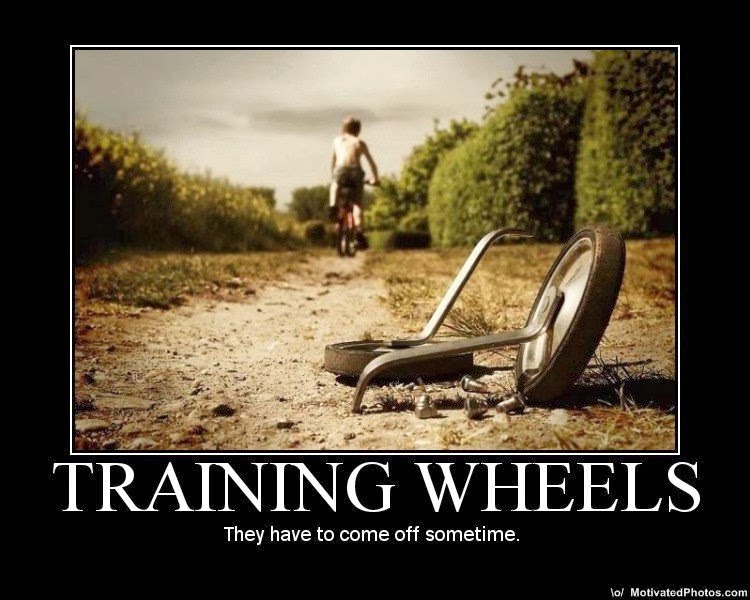
training wheelsI’m not good at radical love. Scratch that. I don’t think radical love is something I can be good or bad at. It’s something I need to learn. Not to be confused with the radically easy love, such as my affection for my friends and family with jobs, education, well-read opinions and good taste in beer. I love a lot of people who are safe, comfortable and encouraging. I support them and they support me, without judgement or hesitation. This is love on training wheels and at close to 40 years old it’s time for me to grow up.

In my experiences of volunteer work in Romania and Mexico and the United States, I’ve learned that for love to be radical it can’t discriminate; it “always protects, always trusts, always hopes, always perseveres” (1 Cor 13: 7) and not just for people who are easy to love. If I truly want a just and peaceful world, radical love is required for the homeless man who hits me up for cash every time I go to Whole Foods for my organically grown and fair trade sourced bread. Or the mentally ill woman on the bus who smells horrible because she hasn’t showered in weeks and wants to talk to me about how the police have ruined her life. Or the fundamentalist Christian at the gay pride festival holding a sign that says “Burn In Hell.” Or the drunk guy who lives under the bridge in my neighborhood. Or the African American woman who comes into my office because she saw the sign outside that reads “Intercommunity Peace and Justice Center” and thinks that we have money to give her so she can turn the lights back on for her three kids in her studio apartment. I need to learn how to love the hard way; to grow out of my comfort zone to embrace people who need love the most.

69766d03f350498d6f6b73b525dcf2c0Radically hard love is the price I pay for being a father. My first child will be born around Christmas this year. My partner and I didn’t know if we could conceive. Now a baby is around the corner and the world is suddenly smaller because it is filled with baby-potential. And just like I would hate to have somebody come over with a pile of dirty dishes in the sink and dog hair everywhere, I am ashamed at the state of my world for which responsibility will fall on my child. The only way my son/daughter is going to succeed where my generation has failed is if I can teach them radically hard love, and I can’t teach something I haven’t experienced.

Radically hard love is the price I pay for faith. My Unitarian Universalist church demands radically hard love. Its seven principles challenge me to move beyond my safe relationships into the scary realm of solidarity with people on the margins of society. If I truly believe in “the inherent worth and dignity of every person” and “justice, equity and compassion in human relations” than I have to act for peace and justice in the world for every person, not just the easy ones. Otherwise the principles of my faith are just more words in a meaningless creed. Working at my non-profit I’m confronted with child trafficking in cocoa supply chains, human slavery involved in electronics manufacturing, mass migration due to global climate change, and what seems like a world going to hell in a hand-basket. It’s easy to succumb to compassion fatigue because everything is urgent and one man can only do so much. The only way I recharge is by going to church in solidarity with other peacemakers. But if I’m going to be honest and effective in my spiritual community, I have to learn radically hard love.

vocationRadically hard love is the price I pay for vocation. Years ago I had this crazy notion that I may be called to serve in some kind of ministry. Now that I’m studying at Seattle University’s School of Theology and Ministry, I am learning skills that help me connect with the prisoner, the beggar, the homeless, the gentile, the mentally ill, the foreigner and the outsider. There is a drive somewhere inside my head and heart (and maybe spirit?) that demands I overcome my unease and fear of people who may ask for more than I am comfortable in giving because these are the people who need radical love the most. If I’m going to true to this mysterious call to Vocation, in order to be true to myself, I have to learn radically hard love.

Because of my commitments to my children, faith and self, it’s time for me to stretch beyond the safe walls of my middle class life. I need to put radically hard love into practice in order to be the father, neighbor and minister I feel called to be, taking risks with my heart by connecting it to people who need it most. That being a Unitarian Universalist comes with a responsibility to creation and neighbor that mirrors the responsibility I learned as a child in bible class:

On one occasion an expert in the law stood up to test Jesus. “Teacher,” he asked, “what must I do to inherit eternal life?”
“What is written in the Law?” he replied. “How do you read it?”
He answered, “‘Love the Lord your God with all your heart and with all your soul and with all your strength and with all your mind’; and, ‘Love your neighbor as yourself.’”
“You have answered correctly,” Jesus replied. “Do this and you will live.”
But he wanted to justify himself, so he asked Jesus, “And who is my neighbor?”
In reply Jesus said: “A man was going down from Jerusalem to Jericho, when he was attacked by robbers. They stripped him of his clothes, beat him and went away, leaving him half dead. A priest happened to be going down the same road, and when he saw the man, he passed by on the other side. So too, a Levite, when he came to the place and saw him, passed by on the other side. But a Samaritan, as he traveled, came where the man was; and when he saw him, he took pity on him. He went to him and bandaged his wounds, pouring on oil and wine. Then he put the man on his own donkey, brought him to an inn and took care of him. The next day he took out two denarii and gave them to the innkeeper. ‘Look after him,’ he said, ‘and when I return, I will reimburse you for any extra expense you may have.
“Which of these three do you think was a neighbor to the man who fell into the hands of robbers?”
The expert in the law replied, “The one who had mercy on him.”
Jesus told him, “Go and do likewise.”

lovewithoutexceptionssquare-500x500Now that I’m an adult, I’m no longer looking for salvation or eternal life but I can hear the wisdom in this story; that the whole world is my neighbor and the whole world needs merciful acts of radical love.

Why I go to church…

collapse-michael-ceraWorking at a peace and justice non-profit is an emotional double-edged sword plowshare. It is emotionally fulfilling to have a small part in making the world a better place. It is emotionally crippling because every day I am confronted with the injustice and inhumanity of human trafficking, war, ecological destruction, greed and corrupt power. Compassion fatigue is real; I can only watch/read/research so much before the pictures/videos/stories become numbers/statistics/calculations instead of real people.

My symptoms include bypassing petitions instead of filling them out; deleting email action-alerts instead of reading them; turning the radio station from KUOW to KEXP when a challenging story comes on; binging on Netflix instead of keeping up with current events. If I let the fatigue persist it would be easy to just give up. Heck, sometimes giving up looks pretty damn attractive. It would be much easier to just give in and become just another consumer who doesn’t give a f*#k about anybody but myself. But I don’t want to be this person. I choose to fight the good fight. Therefore, I go to church.

giphyWhen I announced I was becoming a Unitarian Universalist, some of my atheist friends questioned why I just didn’t give up on religion all together. They all have very good reasons; as an institution religion has been as much a problem of the world as a solution to the world’s problems. Why would an atheist or agnostic attend a church service? Those are places for believers. My answer is simple: To stay a sane, healthy man of peace, I need religion.

Religion provides me with a community, sanctuary and covenant that is focused on peacemaking. It reminds me that I am not alone in working to build a more just world. It cures my compassion fatigue because it restores my faith in people. When peace and justice work becomes too heavy, it is my church that lightens the load. In a space filled with atheists, believers, agnostics, questioners and religious refugees, our attendance shouts to the universe: “We will continue the work! We will not give up! We crave peace!”

rocky-training-oIn order to do the work I do, to continue to read the stories, watch the videos, and look at the pictures; to keep on filling out the petitions, contacting the representatives, and raising awareness; I have to feel like I’m not alone. And every Sunday, along with other justice-seekers, it is in singing our doxology that I am spiritually renewed to keep on fighting the good fight:

“From all that dwell below the skies,
let songs of hope and faith arise!
Let peace, goodwill on earth be sung
through every land, by every tongue.”

May it be so. Amen.